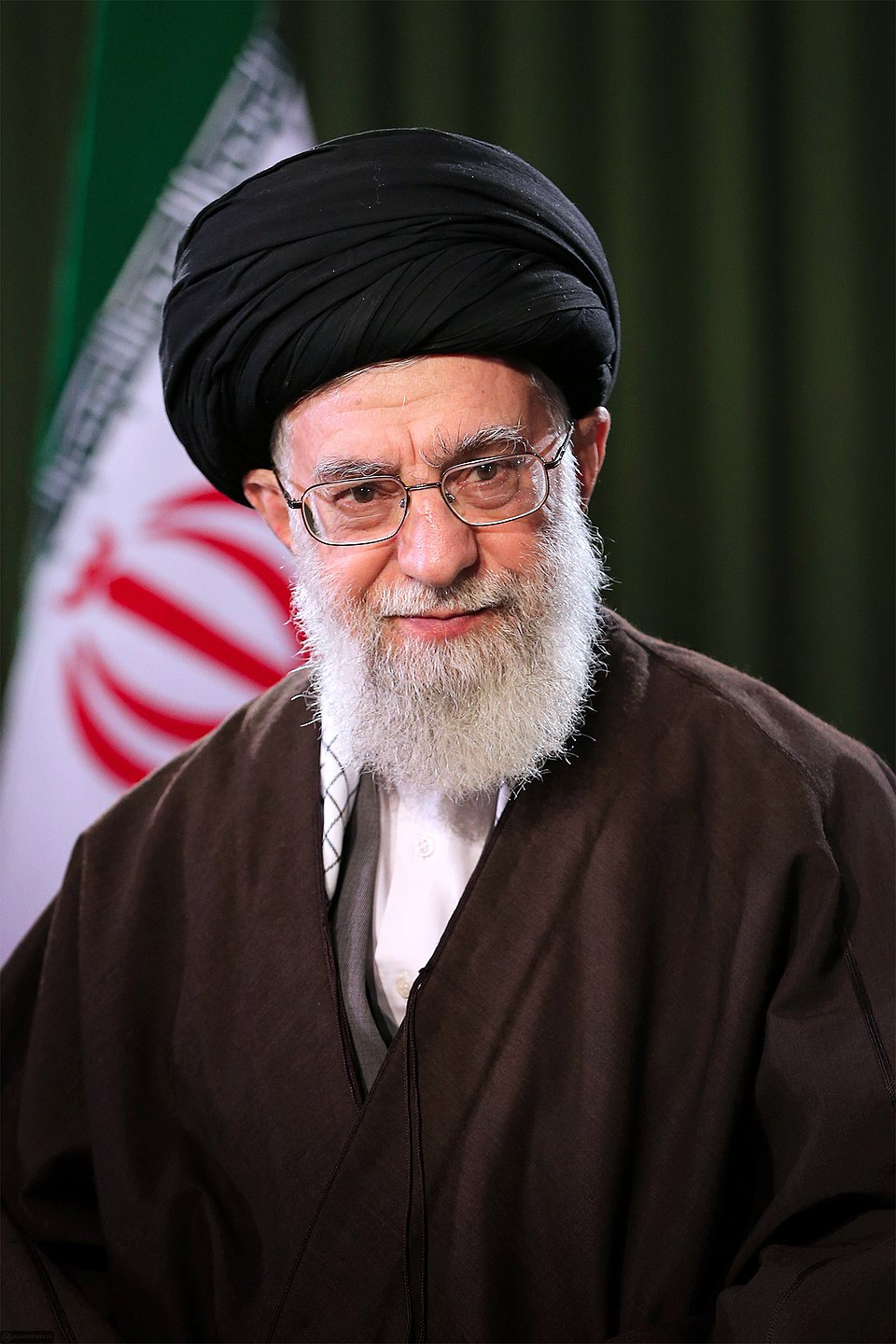
The End of an Era: Khamenei's Fall and Iran's Uncertain Future
The news reverberated globally with the force of an earthquake: Ayatollah Ali Khamenei, Iran's supreme leader for nearly four decades, was dead, killed in a joint US-Israeli strike. This seismic event, confirmed by Iranian state media on a Sunday, instantly plunged the Islamic Republic into its most profound crisis since its establishment. While celebratory cries erupted from Iranians who had long chafed under his repressive rule, loyalists met the announcement with grief and vows of retribution. The death of the cleric, who had relentlessly suppressed dissent while projecting Iran's influence across the Middle East and beyond, marks an unprecedented turning point, opening a dangerous and unpredictable new chapter for a nation already teetering on the brink.
The Seismic Shift: Khamenei's Demise and Its Immediate Aftermath
The confirmation of
Khamenei's Iran-shaking demise came with an almost surreal intensity. An Iranian TV broadcaster, visibly emotional, struggled to confirm the supreme leader had achieved "martyrdom" in a strike that, according to Fars News Agency, directly hit his Tehran compound while he was "carrying out his duties." The vivid imagery of black smoke billowing from the heavily guarded compound, captured by satellite images from Airbus, attested to the severe damage inflicted by the strikes. Initially, Iran's Foreign Ministry attempted to project an image of continuity, insisting Khamenei was "safe and sound." However, these claims were swiftly undermined by definitive announcements from both US President Donald Trump and Israeli Prime Minister Benjamin Netanyahu, who cryptically stated that "many signs" indicated the Iranian leader was "no longer with us."
This abrupt power vacuum created by the death of Ayatollah Ali Khamenei instantly ignited a firestorm of emotions and reactions. For millions of Iranians who had endured decades of his iron-fisted rule, characterized by systematic human rights abuses and economic hardship, the news sparked spontaneous celebrations, a profound hope for change finally blossoming amidst the despair. Conversely, the regime's loyalists and the vast apparatus of the Islamic Revolutionary Guard Corps (IRGC) expressed fury, with figures like Ali Larijani, Secretary of the Supreme National Security Council, vowing to "stab" America in the heart. This stark polarization underscores the deep internal divisions that have long simmered beneath the surface of the Islamic Republic, now brought to a boiling point by the sudden removal of its ultimate authority. The immediate challenge for Tehran is not just navigating external threats but managing the internal ideological and power struggles that are now certain to intensify.
A Nation on the Brink: Iran's Pre-Existing Weaknesses
The targeted strikes that claimed
Khamenei's Iran-defining life did not occur in a vacuum; they landed upon a nation already significantly weakened and internally fractured. For decades, Iran has grappled with the crippling effects of stringent Western sanctions, which have systematically isolated the country and battered its economy, denying its people access to vital resources and opportunities. This long-term economic hardship was exacerbated by a series of US and Israeli strikes in June 2025, which dealt a severe blow to the regime's infrastructure and capabilities, pushing the country further into instability.
Just six months prior to Khamenei’s death, the simmering discontent boiled over into widespread protests. Initially sparked by profound economic grievances, these demonstrations rapidly evolved into a political movement, sweeping across all 31 of Iran's provinces within weeks. The regime responded with its characteristic brutality, unleashing a violent crackdown that resulted in the deaths of thousands of protesters, drawing global condemnation and even a threat of intervention from the Trump administration. This period of intense domestic unrest revealed a populace increasingly disillusioned with the hardline rule of
Khamenei's Iran, exposing the regime's vulnerability and its reliance on repression to maintain control. The supreme leader's death thus comes at a time when Iran was arguably at its weakest point since he assumed power in 1989, making the ensuing leadership crisis all the more perilous. To understand the full scope of challenges facing the nation, read more about
Iran in Crisis: The Aftermath of Supreme Leader Khamenei's Death.
The Catalyst: US-Israeli Intervention and the Call for Regime Change
The decisive US-Israeli intervention on Saturday marked a dramatic escalation, with President Trump explicitly stating that the US military was undertaking a "massive and ongoing operation to prevent this very wicked, radical dictatorship from threatening America and our core national security interests." According to two Israeli sources speaking to CNN, the precision strikes targeted not only Ayatollah Ali Khamenei but also other senior figures, including President Masoud Pezeshkian and the armed forces' chief of staff Abdolrahim Mousavi, signaling a clear intent to decapitate the regime's top leadership.
Crucially, Trump articulated one of the primary aims of this audacious joint attack: regime change. He issued a direct call to the Iranian people, urging them to "rise up against the government," effectively framing the strikes as a catalyst for internal revolution. This declaration of intent transformed the military action from mere retaliation into a strategic maneuver designed to fundamentally alter the political landscape of
Khamenei's Iran. The prospect of such a seismic shift, however, remains fraught with uncertainty, as the future of the Islamic Republic hangs precariously in the balance.
The Path Forward: Hopes, Hazards, and the Future of Iran
The immediate aftermath of Ayatollah Khamenei's death presents a complex and perilous landscape for Iran. While President Trump called for regime change, experts caution that the path to a democratic transition is far from clear. Many analysts suggest that Khamenei’s demise could paradoxically usher in an even harder-line rule, potentially spearheaded by the Islamic Revolutionary Guard Corps (IRGC). The IRGC, deeply entrenched in every facet of Iranian society, from military to economy and politics, is a formidable force. As observed through annual commemorations like 2 Ordibehesht (marking its founding by Imam Khomeini) and 3 Bahman (Pasdar Day honoring its personnel), the IRGC is not merely a military body but a guardian of the revolution's ideological continuity, a role it consistently upheld under
Khamenei's Iran leadership. Their historical significance and immense power make them the most likely entity to fill any immediate power vacuum, potentially consolidating control and quashing any nascent reformist movements.
Ali Larijani, a long-time confidante of Khamenei, indicated that a temporary leadership structure comprising the president and the head of the judiciary would soon be put in place. However, the true struggle for power will unfold behind closed doors, with various factions vying for influence. The IRGC's institutional strength and unwavering loyalty to the regime's foundational principles mean that monitoring their pronouncements and movements will be crucial in deciphering the immediate trajectory of Iran. The hope for popular uprising, while strong among dissidents, must contend with the IRGC's proven capacity for brutal suppression. The coming days and weeks will be critical in determining whether the Iranian people can seize this moment for genuine change, or if the revolutionary guard will tighten its grip, leading to further authoritarianism. For a deeper dive into the power struggles ahead, explore
Who Rules Iran Now? Succession Battle After Khamenei's Demise.
Conclusion
The death of Ayatollah Ali Khamenei marks an undeniable inflection point in the history of
Khamenei's Iran and the broader Middle East. His sudden removal, through an unprecedented US-Israeli strike, has exposed the deep fault lines within the Islamic Republic, amplifying the hopes of a repressed populace for freedom while simultaneously igniting the fury of loyalist factions. As the nation navigates a leaderless future, compounded by decades of sanctions and internal dissent, the world watches to see if this seismic event will truly catalyze regime change or merely usher in a new, perhaps even more unyielding, iteration of hardline rule under the omnipresent shadow of the IRGC. The coming period will undoubtedly be one of intense flux and profound consequence, shaping not only Iran's destiny but the geopolitical landscape of the entire region.