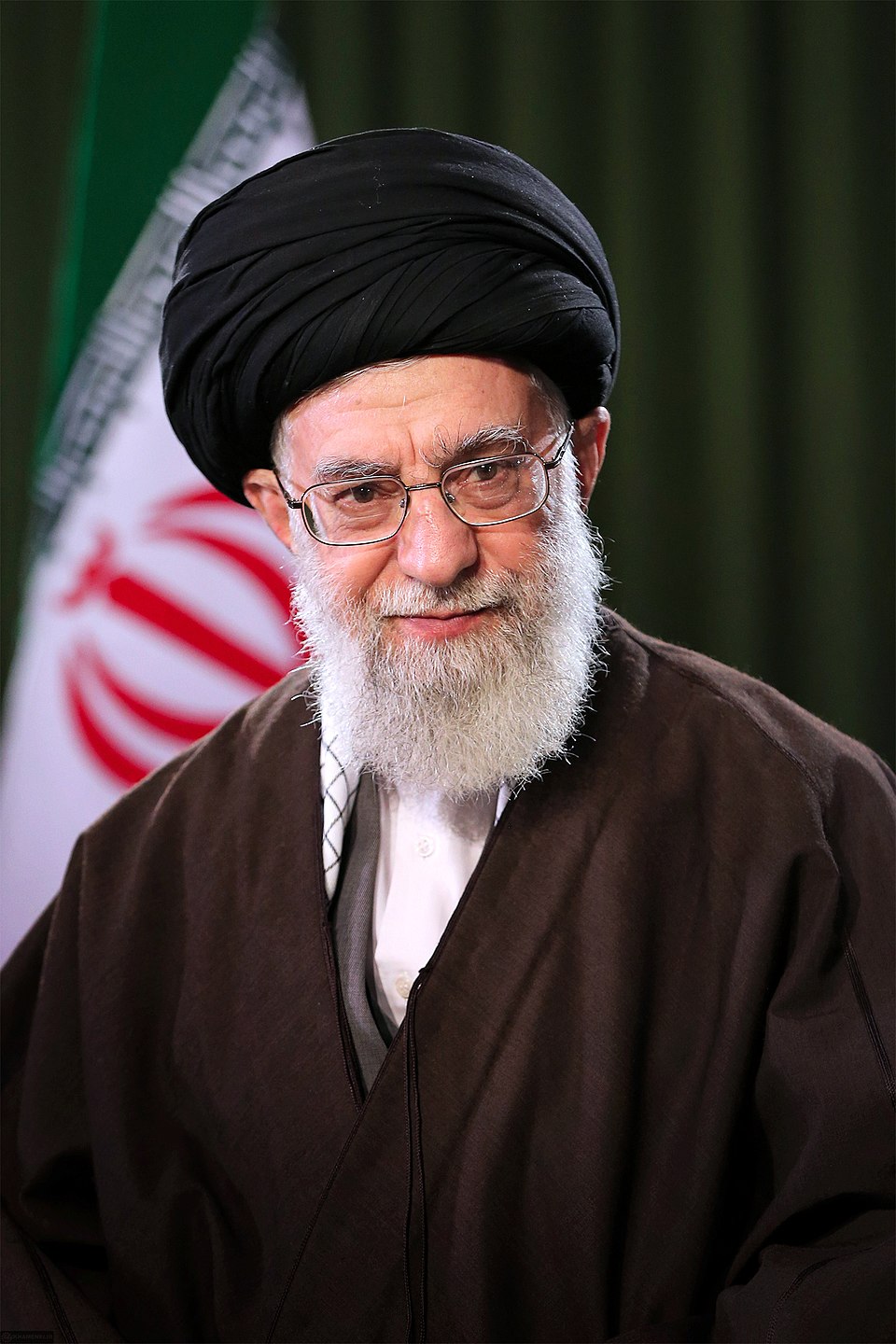
The End of an Era: Khamenei's Demise and Iran's Succession Crisis
The Islamic Republic of Iran is reeling from an unprecedented shock: the confirmed death of its hardline Supreme Leader, Ayatollah Ali Khamenei. After nearly four decades at the helm, Khamenei was reportedly killed in a joint US-Israeli strike on his compound in Tehran on Saturday, as confirmed by Iranian state media on Sunday. This seismic event has plunged the nation into its most profound crisis since its establishment, ushering in a volatile period marked by celebration among his opponents, fury among loyalists, and an urgent, complex battle for succession. The question on everyone's mind is stark: Who rules Iran now? The news, initially denied by Iran’s Foreign Ministry, was swiftly announced by both US President Donald Trump and Israeli Prime Minister Benjamin Netanyahu. Satellite imagery from Airbus corroborating black smoke and severe damage to Khamenei's Tehran compound underscored the gravity of the situation. This targeted action, which also reportedly aimed at President Masoud Pezeshkian and armed forces' chief of staff Abdolrahim Mousavi, has ignited a leadership vacuum that threatens to redefine the future of Iran and its role on the global stage.The Uncharted Territory of Iranian Succession
The death of Ayatollah Ali Khamenei creates an immediate and pressing power vacuum. Unlike many monarchies or even some modern republics, the Islamic Republic does not have a clear, publicly designated successor to the Supreme Leader. The process is traditionally overseen by the Assembly of Experts, a body of 88 religious scholars tasked with selecting the most qualified cleric. However, in this extraordinary circumstance, with external intervention and internal strife at an all-time high, the usual protocols are under immense pressure. Immediately following Khamenei's confirmed demise, a temporary leadership structure was signaled to be put in place, comprising the President and the Head of the Judiciary. While this provides a provisional measure, it does little to address the fundamental question of who will eventually fill the shoes of a figure who held absolute power for so long. The last transition, from Ayatollah Ruhollah Khomeini to Khamenei in 1989, was remarkably swift, but it occurred in a very different geopolitical and domestic climate. Today, Iran is arguably at its weakest point since Khamenei took power, making the current succession battle far more precarious and potentially contentious. The absence of a pre-anointed figure means that various factions within the regime, particularly the powerful Islamic Revolutionary Guard Corps (IRGC), will likely exert significant influence over the selection process.The IRGC: Power Brokers in Waiting
The shadow of the Islamic Revolutionary Guard Corps looms large over the unfolding succession drama in Iran. Experts have already predicted that Khamenei's death is likely to usher in a period of intensified hardline rule, dominated by the IRGC. This elite military and ideological force, established by Imam Khomeini, has evolved far beyond its initial mandate as a defender of the revolution. It is a vast apparatus with significant economic interests, political influence, and military might, permeating every aspect of Iranian society. Annual official commemorations, such as 2 Ordibehesht marking its founding decree, and 3 Bahman (Pasdar Day) honoring its personnel, underscore the IRGC's deep integration into the nation's identity and its role as a guardian of ideological continuity. Under Khamenei's guidance, the IRGC solidified its position, becoming a de facto state within a state. Now, with the Supreme Leader gone, the IRGC is positioned not just to influence, but potentially to dictate, the direction of the new Iran. Their control over security forces, intelligence, and crucial sectors of the economy means that any new Supreme Leader, regardless of their clerical credentials, would likely need the full backing – or indeed, be a chosen figurehead of – the IRGC. The prospect of an IRGC-dominated post-Khamenei Iran suggests a continuity of hardline policies, both domestically and regionally, possibly even with greater assertiveness as they seek to consolidate power.International Intervention and the Promise of Regime Change
The US-Israeli strikes that killed Ayatollah Ali Khamenei were not merely punitive; they were, as US President Donald Trump explicitly stated, aimed at regime change. Trump's call for the Iranian people to "rise up against the government" highlights a distinct strategic objective beyond military retaliation. This external intervention injects a new, unpredictable variable into the already complex dynamics of a post-Khamenei Iran. The immediate reaction from within the Iranian establishment was defiant. Ali Larijani, Secretary of the Supreme National Security Council and a key advisor to the deceased leader, vowed to "stab America in the heart" in retaliation. This stark rhetoric suggests that while the US and Israel hope for a fundamental shift, the immediate response from the existing power structure, especially the IRGC, may be to double down on its anti-Western stance and consolidate power internally. The critical question remains whether the aspirations of regime change, fueled by external pressure and internal dissent, can truly materialize, or if the intervention will inadvertently strengthen the hardline elements seeking to maintain the status quo. To understand the full scope of these ambitions and their potential impact, delve deeper into Khamenei's Fall: Iran's Weakness, US Strikes & Regime Change Hopes.Iran's Deepening Crisis: A Nation at a Crossroads
The landscape of Iran under Khamenei had already been marked by profound instability and a nation arguably at its weakest since he took power in 1989. Decades of Western sanctions had left the country economically battered and politically isolated, severely impacting the lives of ordinary Iranians. This economic distress proved to be a fertile ground for dissent, erupting into widespread protests in June 2025 – just six months prior to Khamenei's death. These protests, initially sparked by economic grievances, quickly morphed into political demands, spreading across all 31 of Iran’s provinces. The regime’s response was brutal, characterized by a violent crackdown that killed thousands and provoked a global outcry. This internal turmoil and Iran's perceived vulnerability likely played a significant role in the timing of the US-Israeli strikes. The death of Khamenei, therefore, does not occur in a vacuum but against a backdrop of intense domestic unrest and a deeply fractured society. The immediate aftermath promises to be a period of heightened uncertainty, as the regime grapples with both internal challenges and the monumental task of replacing its long-serving Supreme Leader. For a comprehensive look at the unfolding domestic situation, read Iran in Crisis: The Aftermath of Supreme Leader Khamenei's Death.Practical Insights: What to Watch For in Post-Khamenei Iran
As the world watches Iran navigate this unprecedented transition, several key factors will dictate the trajectory of the nation:
- The Speed and Nature of Succession: Will the Assembly of Experts quickly choose a new Supreme Leader, or will the process be drawn out and contentious, indicating internal power struggles?
- The IRGC's Dominance: Observe how openly the Islamic Revolutionary Guard Corps asserts its influence. Will they place one of their own or a closely aligned figure in power, or will they operate more subtly behind a traditional cleric?
- Public Response: Will the initial mixed reactions among Iranians escalate into sustained, widespread protests, potentially aligning with the US calls for regime change, or will state repression maintain a fragile calm?
- Regional Implications: How will regional adversaries and allies react to this power shift? Will Iran's foreign policy become more confrontational, or will the new leadership seek de-escalation?
- Economic Outlook: With continued sanctions and internal instability, how will the new leadership address Iran's severe economic woes? Any signs of economic reform or further entrenchment will be telling.